
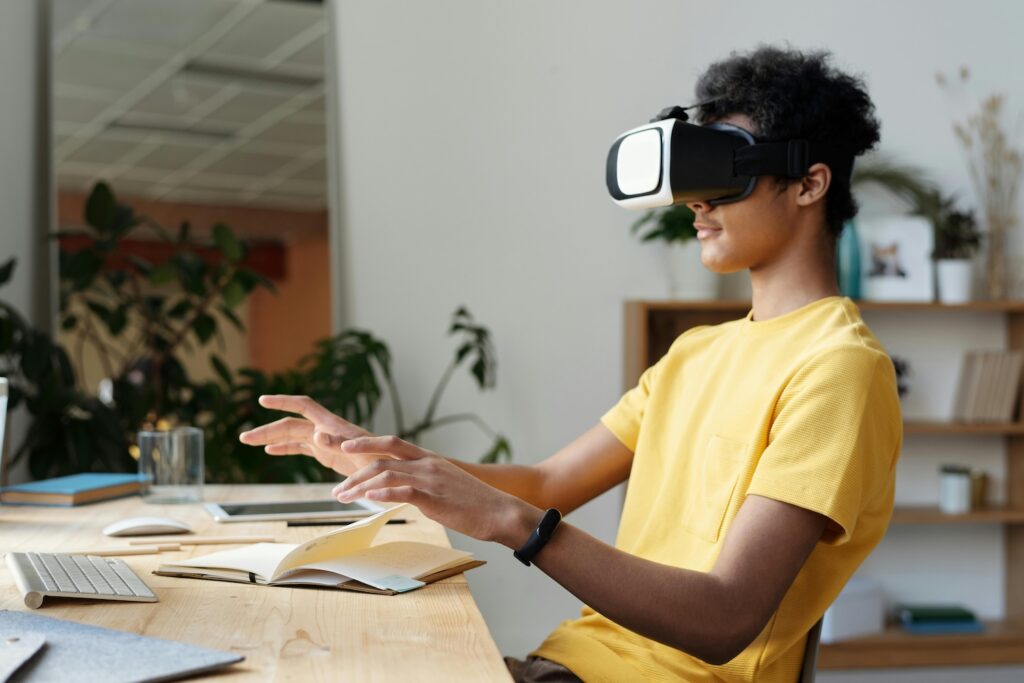
The Gulf Cooperation Council (GCC) region stands at the forefront of a digital revolution. From Dubai’s Museum of the Future to Saudi Arabia’s NEOM smart city project, augmented reality (AR) and virtual reality (VR) technologies are reshaping how businesses engage with customers across the Middle East. Yet behind every successful immersive experience lies a critical foundation: comprehensive user testing methodologies that ensure these cutting-edge technologies deliver meaningful value to Arabic-speaking audiences.
As the GCC AR market projects growth from $1.01 billion in 2024 to $12.68 billion by 2033, organizations need robust testing frameworks to validate their immersive experiences. This surge in adoption brings unique challenges that traditional usability testing methods struggle to address.
Understanding AR VR User Testing in the GCC Context
User testing for AR and VR applications differs fundamentally from conventional digital product testing. While traditional user research focuses on screen-based interactions, immersive technology testing requires evaluating how users navigate three-dimensional spaces, respond to spatial audio cues, and maintain comfort during extended sessions.
In the GCC market, these challenges become more complex due to cultural considerations. Arabic reading patterns (right-to-left), cultural symbols, and regional preferences for visual hierarchy all influence how users interact with immersive environments. A VR training module designed for Dubai’s hospitality sector must account for local customs, while an AR shopping experience in Riyadh needs to respect cultural sensitivities around product presentation.
The Immersiveness Quality Factor
Traditional quality assurance focuses on functionality, performance, and reliability. AR VR user testing introduces a new dimension: immersiveness. This quality factor measures how effectively the technology transports users into the intended experience without breaking the illusion.
For GCC businesses, immersiveness testing becomes particularly crucial when developing culturally relevant content. A virtual tour of Kuwait’s Grand Mosque requires different immersiveness standards than a gaming application. User research must evaluate whether the experience feels authentic to local audiences while maintaining technical excellence.
Essential AR VR User Testing Methodologies
Environmental Setup and Preparation
Effective AR VR user testing begins with meticulous environmental preparation. Unlike traditional usability testing conducted at desks, immersive technology requires dedicated physical spaces that mirror real-world usage scenarios.
For AR applications, this means testing in environments where users will actually engage with the technology. A retail AR app designed for Dubai Mall requires testing in similar lighting conditions and spatial layouts. The testing environment should include various objects that the AR system needs to detect and interact with, from furniture to architectural elements.
VR testing demands even more careful space preparation. Testing areas must be cleared of obstacles while providing enough room for natural movement. The space should accommodate different user heights and movement patterns common in GCC populations.
Manual Testing Approaches
Manual user testing for AR VR applications involves human testers experiencing the full range of intended interactions. This approach proves essential for evaluating subjective elements like comfort, engagement, and cultural appropriateness.
Testers should represent the target demographic, including Arabic speakers familiar with local customs and expectations. For a VR training program designed for Saudi Arabia’s Vision 2030 initiatives, testers should understand the cultural context and professional standards the application aims to support.
Manual testing protocols should include:
- Extended session testing to identify fatigue and discomfort patterns
- Natural movement evaluation across the full 360-degree range
- Cultural sensitivity assessment for visual and audio elements
- Accessibility testing for users with different physical capabilities
Automated Testing Integration
While human insight remains irreplaceable for immersive experiences, automated testing provides valuable data on technical performance. Automated systems excel at measuring frame rates, latency, tracking accuracy, and system stability across extended periods.
For GCC organizations developing AR VR applications, automated testing should focus on:
- Performance consistency across different device configurations popular in the region
- Network performance testing for 5G and high-speed internet infrastructure
- Battery life optimization for mobile AR applications
- Heat generation monitoring in the region’s challenging climate conditions
Addressing Physical and Psychological Comfort
User testing for immersive technologies must prioritize user comfort and safety. VR applications, in particular, present risks of motion sickness, eye strain, and disorientation that traditional applications never encounter.
GCC organizations should establish comprehensive comfort testing protocols that monitor users for signs of distress throughout testing sessions. This includes regular check-ins, heart rate monitoring where appropriate, and immediate session termination if users experience discomfort.
Cultural Comfort Considerations
Beyond physical comfort, user research in the GCC must address cultural comfort. Virtual environments should respect local customs, religious considerations, and social norms. Testing protocols should evaluate whether immersive experiences align with regional values and expectations.
For example, a VR collaboration platform designed for Bahrain’s financial sector needs testing that ensures virtual meeting spaces feel appropriate for professional interactions while respecting cultural preferences for personal space and interaction styles.
Performance Metrics and Measurement
AR VR user testing requires specialized metrics that capture both technical performance and user experience quality. Traditional usability metrics like task completion rates remain relevant, but immersive technologies demand additional measurements.
Technical Performance Indicators
Key technical metrics for AR VR user testing include:
- Frame rate consistency (minimum 60 FPS for VR, 30 FPS for AR)
- Motion-to-photon latency (under 20ms for VR applications)
- Tracking accuracy for head and hand movements
- Object recognition speed and accuracy for AR applications
- Battery consumption rates during typical usage sessions
User Experience Metrics
Immersive technology user research should measure:
- Presence: How convincingly the technology transports users into virtual environments
- Comfort duration: Maximum session length before users experience fatigue
- Learning curve: Time required for users to become proficient with interactions
- Engagement retention: User willingness to return for additional sessions
- Cultural resonance: How well the experience aligns with local expectations and values
Specialized Testing Scenarios for GCC Markets
Enterprise and Training Applications
The GCC region shows strong adoption of AR VR for enterprise training and collaboration. Qatar’s energy sector, UAE’s aviation industry, and Saudi Arabia’s manufacturing initiatives all leverage immersive technologies for workforce development.
User testing for enterprise applications requires scenarios that mirror real workplace conditions. This includes testing in environments with industrial noise, varying lighting conditions, and the presence of safety equipment that might interfere with tracking systems.
Testing protocols should evaluate whether training modules effectively transfer skills to real-world applications. This requires follow-up assessments that measure knowledge retention and practical application of VR-learned skills.
Retail and Consumer Applications
GCC retail markets increasingly adopt AR for product visualization and virtual shopping experiences. User testing for these applications must account for diverse shopping behaviors and preferences across the region.
Testing scenarios should include various demographic groups, from tech-savvy millennials in Dubai to more traditional shoppers in smaller GCC cities. The research should evaluate whether AR experiences enhance or complicate the shopping process for different user segments.
Cultural and Educational Content
Museums, cultural sites, and educational institutions across the GCC use AR VR to create immersive learning experiences. The Museum of the Future in Dubai and various cultural heritage sites in Saudi Arabia exemplify this trend.
User testing for cultural applications requires particular sensitivity to historical accuracy, religious appropriateness, and educational effectiveness. Testing should involve cultural experts alongside technical evaluators to ensure content meets both technological and cultural standards.
Overcoming Common Testing Challenges
Device Fragmentation
The GCC market includes diverse device ecosystems, from high-end VR headsets to smartphone-based AR applications. User testing must account for this fragmentation by testing across multiple device categories and performance levels.
Organizations should prioritize testing on devices popular in their target markets. This might include specific smartphone models common in the region or VR headsets available through local retailers.
Network Infrastructure Variations
While GCC countries boast advanced telecommunications infrastructure, network performance varies across urban and rural areas. User testing should include scenarios with different connection speeds and stability levels.
Cloud-based AR VR applications require particular attention to network performance testing, as latency issues become immediately apparent to users and can break immersion.
Multilingual and Cultural Adaptation
GCC markets require applications that work effectively in both Arabic and English, often within the same user session. User testing must evaluate language switching, text rendering in immersive environments, and cultural adaptation of visual elements.
Testing should include native Arabic speakers who understand regional dialects and cultural nuances. This ensures that localized content feels natural and appropriate to target audiences.
Building Effective Testing Teams
Successful AR VR user testing requires multidisciplinary teams that combine technical expertise with cultural knowledge. GCC organizations should build testing teams that include:
- Technical specialists familiar with AR VR development and testing tools
- UX researchers experienced in immersive technology evaluation
- Cultural consultants who understand regional preferences and sensitivities
- Representative users from target demographic groups
- Accessibility experts who ensure inclusive design
Training and Development
AR VR user testing requires specialized skills that traditional usability testing doesn’t address. Organizations should invest in training programs that help team members understand immersive technology challenges and opportunities.
This training should cover both technical aspects (understanding VR tracking systems, AR occlusion handling) and human factors (recognizing motion sickness symptoms, cultural sensitivity in virtual environments).
Future Trends and Opportunities
The GCC AR VR market continues evolving rapidly, driven by government initiatives like Saudi Arabia’s Vision 2030 and UAE’s innovation strategies. User testing methodologies must adapt to emerging trends and technologies.
AI-Enhanced Testing
Artificial intelligence increasingly supports AR VR user testing through automated behavior analysis, predictive comfort modeling, and personalized experience optimization. GCC organizations should explore AI tools that enhance testing efficiency while maintaining human insight.
5G Integration
Advanced 5G networks across the GCC enable new AR VR applications with higher fidelity and real-time collaboration features. User testing must evolve to evaluate these enhanced capabilities and their impact on user experience.
Mixed Reality Evolution
Mixed reality applications that blend AR and VR elements present new testing challenges. These hybrid experiences require evaluation methodologies that address both augmented and virtual interaction paradigms.
Getting Started with AR VR User Testing
Organizations ready to implement AR VR user testing should begin with pilot projects that establish basic methodologies and team capabilities. Start with simple applications and gradually expand to more complex immersive experiences.
The key to success lies in combining technical rigor with cultural sensitivity, ensuring that immersive technologies serve GCC audiences effectively while respecting local values and preferences.
Ready to transform your digital products through comprehensive user testing? Get started with UsersArabia and discover how professional user research can elevate your AR VR applications for GCC markets. Our platform connects you with local users who understand the cultural nuances and technical requirements that make immersive experiences successful in the Middle East.
The future of AR VR in the GCC depends on thoughtful user testing that bridges technological innovation with cultural understanding. Organizations that invest in comprehensive testing methodologies today will lead the immersive technology revolution tomorrow.